
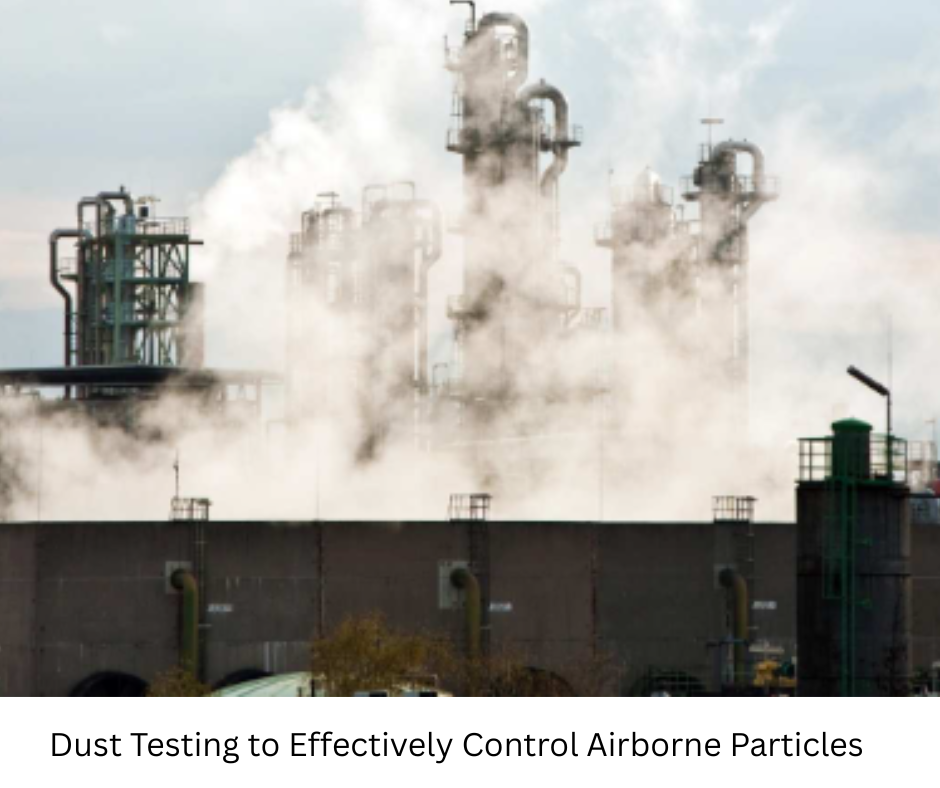
The Importance of Dust Testing to Effectively Control Airborne Particles
In industrial facilities where dust generation is inherent to operations, effective control of airborne particulate matter is crucial for protecting worker health, ensuring regulatory compliance, and maintaining reliable plant performance. Dust control systems are engineered to capture and contain airborne particles, but their effectiveness must be verified under actual operating conditions.
Routine dust testing provides measurable data on airborne particulate levels, employee exposure, and system performance. By integrating structured testing into a facility’s environmental health and safety program, organizations can validate dust control effectiveness, identify performance gaps, and implement corrective actions before exposure limits are exceeded.
Airborne Dust: Inhalable vs. Respirable
Not all dust presents the same level of risk. One of the most critical elements of dust testing is identifying which fraction of dust employees are exposed to.
Inhalable Dust
Inhalable dust consists of larger particles, typically up to 100 microns, that enter the nose and mouth during breathing. These particles usually deposit in the upper respiratory tract. Common sources include material transfer points, bulk loading, cutting, and grinding operations.
While often classified as “nuisance dust,” prolonged exposure to inhalable dust can still cause irritation, reduced lung function, and long-term health issues.
Respirable Dust
Respirable dust includes fine particles generally smaller than 10 microns. These particles can penetrate deep into the lungs and reach the alveoli, where they are most harmful. Materials such as crystalline silica, metal dust, coal dust, and certain chemical powders fall into this category.
Respirable dust poses the greatest health risk and is subject to significantly lower exposure limits due to its association with diseases such as silicosis, occupational asthma, and chronic obstructive pulmonary disease (COPD).
Effective dust testing distinguishes between inhalable and respirable fractions to ensure accurate exposure assessment and proper control strategies.
Dust Sampling Methods Used in Industrial Testing
Choosing the right sampling method is essential for obtaining accurate, defensible results.
Personal Air Sampling
Personal air sampling measures the dust concentration a worker is exposed to during a typical shift. A calibrated pump draws air through a filter positioned within the breathing zone.
This method is the primary tool for OSHA compliance and is used to assess both inhalable and respirable dust exposure using appropriate sampling heads.
Area (Static) Air Sampling
Area sampling involves placing monitors at fixed locations near dust-generating equipment, along process lines, or within work zones. This method helps identify high-emission areas and evaluate the effectiveness of dust collection hoods and local exhaust ventilation systems.
Real-Time Dust Monitoring
Direct-reading instruments provide immediate feedback on dust concentrations. These monitors are useful for identifying short-term exposure spikes, evaluating process changes, and validating system adjustments. While often used alongside gravimetric sampling, they offer valuable insight into daily dust behavior.
OSHA Standards and Exposure Limits
Dust testing plays a critical role in demonstrating compliance with OSHA regulations, particularly:
- 29 CFR 1910.1000 – Air Contaminants
- 29 CFR 1926.1153 – Respirable Crystalline Silica
- 29 CFR 1910.94 – Ventilation
- 29 CFR 1910 Subpart Z – Toxic and Hazardous Substances
OSHA exposure limits are based on an 8-hour time-weighted average (TWA) and require employers to assess and control employee exposure through engineering solutions wherever feasible.
Common OSHA Dust Exposure Limits
Dust Type | OSHA PEL | Dust Fraction |
Particulates Not Otherwise Regulated (PNOR) | 15 mg/m³ | Inhalable |
5 mg/m³ | Respirable | |
Respirable Crystalline Silica | 50 µg/m³ | Respirable |
Portland Cement Dust | 15 mg/m³ | Inhalable |
Metal Dusts (varies by material) | Substance-specific | Total / Respirable |
Wood Dust (Hardwood) | 5 mg/m³ | Inhalable |
Many facilities voluntarily adopt more conservative internal limits aligned with ACGIH guidelines to strengthen worker protection.
How Often Should Dust Testing Be Conducted?
Testing frequency should be risk-based and aligned with operational realities:
- Baseline testing after new system installation or major modification
- Annual or biannual testing for stable processes
- Quarterly or higher frequency for high-risk dusts such as silica or toxic metals
- After process or material changes
- In response to employee complaints or visible dust issues
Regular testing helps identify gradual system degradation before exposures exceed permissible limits.
Using Dust Testing Data to Improve Dust Control Systems
Dust testing should drive action not just documentation. Test results often reveal:
- Insufficient capture velocity at hoods
- Airflow losses due to duct leaks or filter loading
- Fan performance issues
- Poor hood design or placement
When testing data is aligned with system design parameters, corrective actions can be implemented efficiently, improving both dust control effectiveness and energy performance.
Conclusion
Effective dust control begins with understanding what workers are actually breathing, not what the system was designed to handle on paper. Dust testing provides the clarity needed to control airborne particles, protect employee health, and maintain regulatory compliance.
By combining proper sampling methods, clear differentiation between respirable and inhalable dust, and a structured testing program aligned with OSHA requirements, facilities can build safer, more reliable, and more efficient operations.