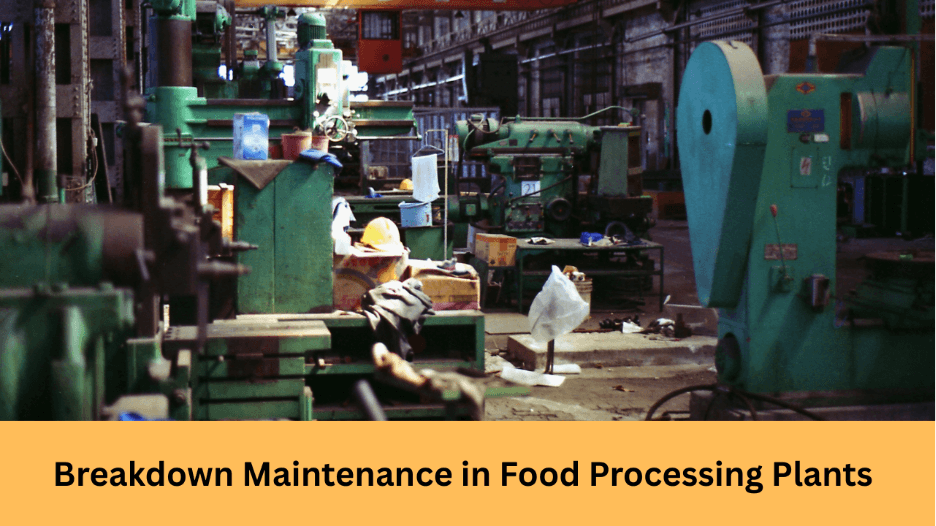
In the fast-paced environment of food processing plants, equipment downtime can have immediate and severe consequences. Every minute of halted production can translate to financial loss, compromised food safety, and supply chain disruptions. That’s why responding quickly and efficiently to breakdowns isn’t just important — it’s mission-critical.
This article breaks down the essential steps for handling breakdown maintenance in food processing plants and how to build a more responsive and resilient maintenance system.
What Is Breakdown Maintenance?
Breakdown maintenance refers to the reactive process of repairing equipment or machinery after it has failed. In the context of food processing, this may involve:
-Conveyor belt stoppage
-Mixer or grinder malfunctions
-Cooling or refrigeration unit failures
-Boiler or steam system issues
-Packaging machine faults
Unlike preventive or predictive maintenance, breakdown maintenance occurs without warning, so response time and preparation are key.
Why Fast Breakdown Response Matters in Food Plants
- Minimizes Downtime: Every minute of halted production is costly, especially in perishable goods processing.
- Maintains Product Quality: Equipment failure can result in temperature fluctuations or incomplete processing.
- Ensures Food Safety Compliance: Regulatory bodies like the FDA or FSSAI require strict hygiene and process control.
- Prevents Chain Reactions: One malfunctioning machine can halt an entire line, leading to cascading issues.
Step-by-Step Guide: How to Respond to Breakdown Maintenance
- Establish a Rapid Response Protocol: Create a clear SOP (Standard Operating Procedure) for breakdown events:
-Who gets notified
-Who authorizes repairs
-Communication flow between production, maintenance, and quality teams
Tip: Use digital CMMS (Computerized Maintenance Management Systems) to automate alerts and assign tasks instantly.
- Empower On-Site First Responders: Train operators and junior technicians to:
-Identify early signs of failure
-Shut down machines safely
-Perform basic diagnostics.
This ensures immediate containment of the issue while specialists arrive.
- Stock Critical Spares: A robust spares inventory system reduces repair delays. Focus on high-risk components such as:
1. Bearing
2. Seals and gaskets
3. Sensors
4.Electrical relay
5.Pneumatic component
Pro Tip: Classify inventory by criticality and lead time.
- Collaborate with cvtrOEMs and Third-Party Technicians
Build relationships with:
a.OEM field service engineers
b.Local third-party service providers
c.Electrical and refrigeration specialists
Pre-negotiated SLAs (Service Level Agreements) can ensure faster turnaround during emergencies.
- Implement Root Cause Analysis (RCA)
Don’t stop at fixing the machine. Use tools like:
1.5 Whys
2. Fishbone diagrams
3.Fault tree analysis
This prevents repeat failures and feeds into continuous improvement.
- Ensure Documentation and Traceability
Document every breakdown event:
-Time of failure
-Equipment involved
-Actions taken
-Downtime duration
-Spare parts used
This data supports trend analysis and maintenance planning.
Bonus: Technologies to Speed Up Breakdown Maintenance
1.CMMS software for real-time tracking
2.Remote monitoring sensors for early detection
3.Augmented reality (AR) support for remote expert guidance
4.IoT-enabled systems for predictive alerts
Best Practices for Minimizing Future Breakdowns
*Implement predictive maintenance strategies alongside reactive measures.
*Conduct regular operator training on machine care.
*Audit maintenance logs monthly to spot recurring issues..
*Align breakdown response with HACCP and food safety plans.
Conclusion
Breakdowns are inevitable, but chaos doesn’t have to be. With the right planning, training, and tools, food processing plants can transform reactive maintenance into a fast, effective system that minimizes downtime, protects product integrity, and upholds regulatory compliance.
Need Help Setting Up an Efficient Maintenance Response Plan?
Our experts can help you implement smart breakdown strategies customized for food manufacturing. Contact us today to learn more.