What the NYC Legionnaires' Outbreak Teaches Us About Cooling Tower Maintenance
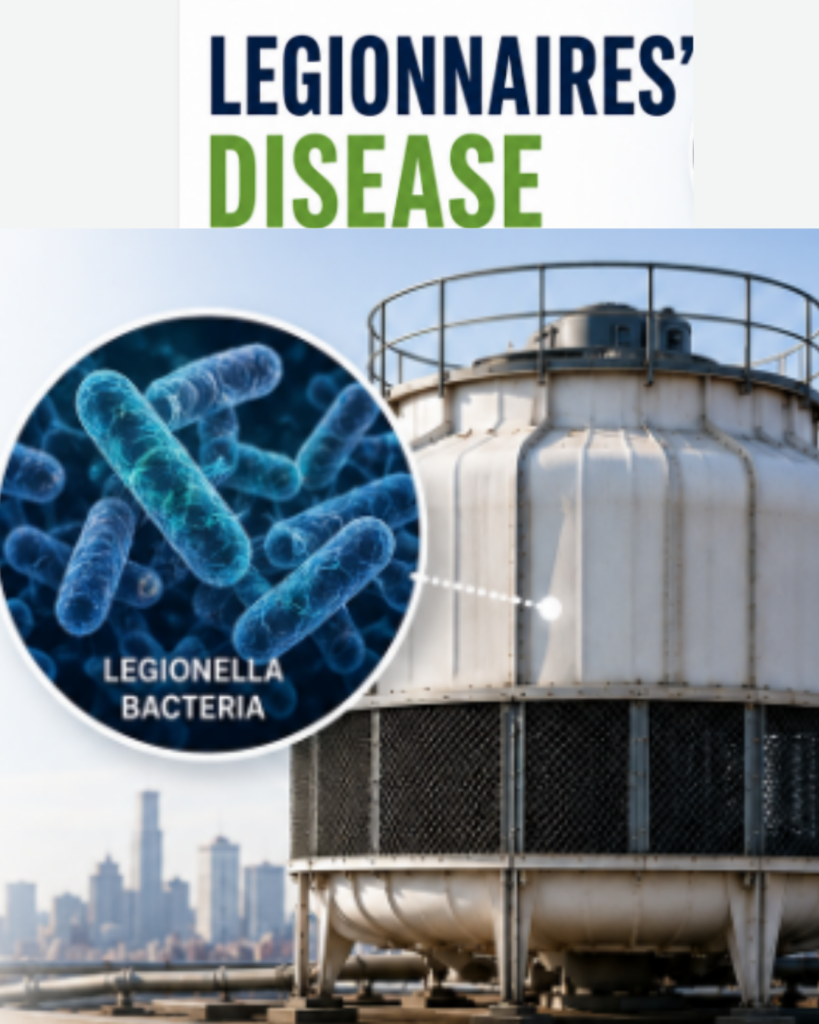
The recent Legionnaires’ disease outbreak in New York City’s Upper East Side has once again highlighted an often-overlooked part of our buildings, the cooling tower.
As the number of reported cases increased, New York City responded aggressively. Rather than waiting for confirmatory laboratory results, city officials ordered immediate cleaning and disinfection of cooling towers that tested positive for Legionella during initial screening. The administration also took the unusual step of publicly releasing the addresses of affected buildings, reinforcing the importance of transparency and rapid action during a public health event.
Why Are Cooling Towers the Focus?
Cooling towers are an essential part of many commercial HVAC systems. Their job is to remove excess heat from buildings by circulating water and releasing heat into the atmosphere.
However, they also create an environment where Legionella bacteria can multiply if water treatment and maintenance are neglected. Warm water, biofilm, sediment, and stagnant conditions provide the ideal breeding ground.
As the tower operates, it releases a fine mist outdoors. If that mist contains Legionella bacteria, people nearby can inhale contaminated water droplets and develop Legionnaires’ disease, a severe form of pneumonia. The disease is not spread from person to person.
Good Maintenance Is Public Health
The NYC response sends an important message: cooling towers are more than mechanical equipment, they are part of a building’s public health infrastructure.
Routine maintenance should include:
- Regular inspection and cleaning
- Water treatment and disinfection
- Monitoring water quality and temperature
- Preventing stagnant water and biofilm buildup
- Maintaining accurate inspection and maintenance records
These aren’t just compliance activities, they are preventive measures that protect building occupants and the surrounding community.
A Lesson for Every Facility Professional
As project managers, facility managers, HVAC engineers, and EHS professionals, we often focus on energy efficiency, equipment performance, and operational reliability. Those priorities matter, but so does ensuring that building systems remain safe throughout their lifecycle.
The recent outbreak is a reminder that maintenance of HVAC systems isn’t just about keeping equipment running. It’s about maintaining indoor air quality, reducing biological risks, and ultimately protecting lives.
The safest buildings aren’t simply the ones with the newest equipment, they’re the ones with the strongest maintenance culture.