Energy Management and Safety in High-Load Industrial Environments
In energy-intensive industries, small equipment inefficiencies can lead to significant operating costs over time. Industrial fans, pumps, compressors, and heating systems often run for long hours, making energy management an important part of plant operations.
The goal is to improve efficiency while maintaining production performance and worker safety.
1. Identify and Reduce Energy Waste
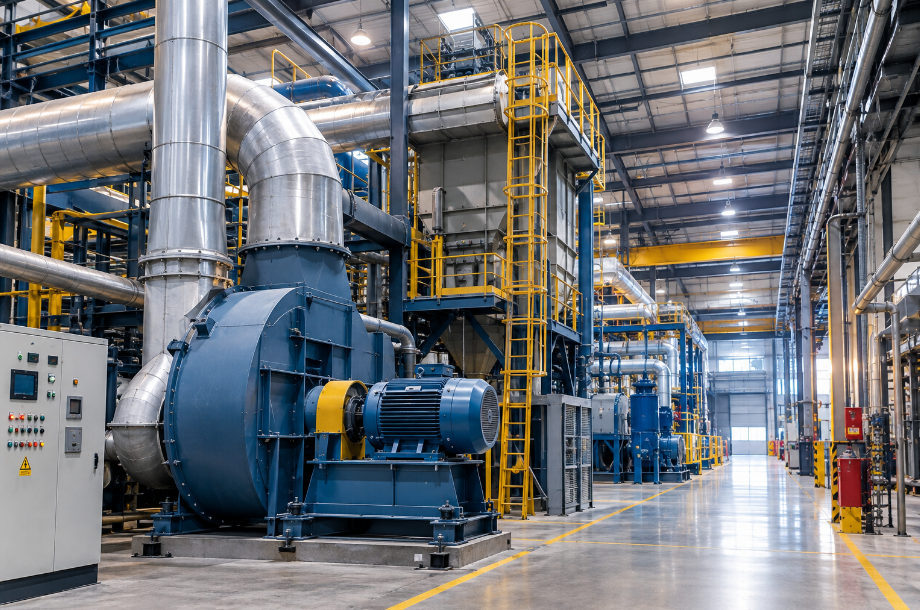
Consider a manufacturing plant where an industrial dust collector operates for 16 hours a day. As its filters get clogged, airflow resistance increases, forcing the fan to work harder and consume more energy.
Regularly monitor the filter differential pressure. Cleaning or replacing filters when necessary can help restore performance and control energy consumption.
Similar improvements can be achieved by repairing compressed air leaks, maintaining motor alignment, insulating hot pipelines, and optimizing equipment operating schedules.
2. Never Compromise on Safety
Imagine a factory trying to reduce electricity costs by lowering the speed of its fume extraction fans. Although energy consumption may decrease, the reduced airflow could allow welding fumes to accumulate around workers.
The correct approach is to assess the extraction requirements, measure airflow, and adjust the system only when adequate contaminant capture can be maintained.
Energy-saving decisions must always account for worker exposure, process requirements, and essential safety systems.
3. Monitor Performance and Maintain Equipment
Energy monitoring helps identify problems before they result in major losses. Tracking electricity consumption, airflow, filter pressure drop, and equipment operating hours gives maintenance teams a clearer picture of system performance.
For example, a sudden increase in fan power or filter pressure drop may indicate a developing maintenance issue. Investigating the cause early can prevent unnecessary energy use and unplanned downtime.
4. Build a Practical Energy Management Plan
Begin with an energy audit, establish a baseline, and identify the most significant sources of waste. Implement low-cost improvements first, then evaluate larger investments based on measurable savings and payback.
ISO 50001 provides a framework for energy management, while applicable OSHA requirements and relevant NFPA standards address specific workplace and equipment safety concerns.
Conclusion
Energy management works best when it is integrated into everyday plant operations. A clogged filter, an air leak, or an inefficient heating system may appear to be a minor maintenance issue, but repeated losses can affect the facility’s overall operating costs.
The priority should be to identify the cause, measure the improvement, and verify that safety and production requirements remain satisfied. Sustainable energy savings come from better engineering and maintenance, not from cutting essential operating requirements.